Fireproofing on structural steel is invisible once the finishes go on and only matters on the worst day of the building’s life. Its performance depends on three numbers — thickness, density and adhesion — and on the surface it was applied to. The installer measures those numbers as part of their own quality control, and on most projects that is the only measurement anyone makes. This article explains why an independent third-party fireproofing inspection produces a different, more reliable result than installer self-certification, and what a proper inspection includes. For the service, see fireproofing inspection.
What fireproofing has to achieve
A steel beam or column loses strength as it heats. Fireproofing — spray-applied cementitious material, or a thin-film intumescent coating — insulates the steel so that it stays below its critical temperature for the fire-resistance period the building code requires, typically one to three hours. The required thickness depends on the section factor of the steel member (its surface area relative to its mass), the rating and the product’s tested performance in a furnace test such as ASTM E119. The installer applies the product to the thickness the fire engineer or the manufacturer’s schedule specifies. If it is thinner, the steel reaches its critical temperature sooner and the structure fails earlier than the design assumed.
Why self-certification is not enough
The installer is paid to apply material and to finish on time. Every extra millimetre costs money and every re-spray costs programme. That does not make installers dishonest; it makes their measurements a conflict of interest. The pattern we see is not fraud but drift: thickness readings taken where the coating is visibly thick, density samples cut from the best areas, adhesion tests skipped because the sprayer “has never had a problem”. The paperwork looks complete and the numbers are wrong at the margins that matter — the underside of beams, the webs of columns, the connections.
An independent inspector has no material to sell and no programme to protect. Spectrum Elements for Consulting does not supply or install fireproofing; our role is to observe, measure and record. The result is a set of measurements the owner, the consultant and Civil Defence can rely on.
What a third-party inspection includes
Substrate
Steel cleanliness, primer compatibility (some primers need a bonding agent or mesh), and the condition of the surface before application. Fireproofing applied over dust, oil or an incompatible primer delaminates regardless of thickness.
Thickness
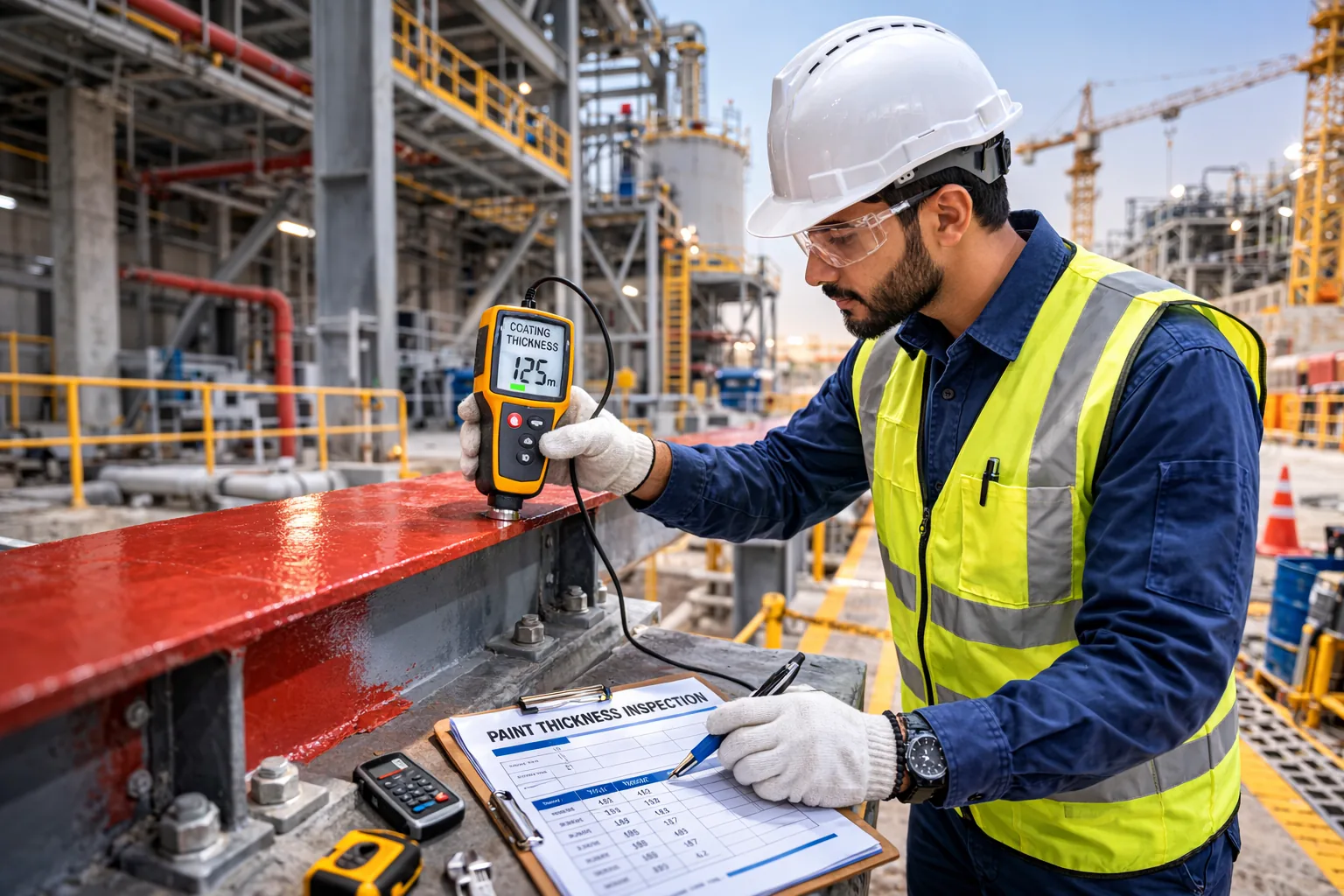
Wet or dry film thickness measured at the frequency the specification sets — commonly a number of readings per member type per floor, on flanges, webs and undersides, not just where it is convenient. For cementitious products a depth gauge; for intumescent coatings a DFT gauge to the method in SSPC-PA 2. Readings are recorded against the required thickness for each section factor, and the minimum and average are both reported.
Density
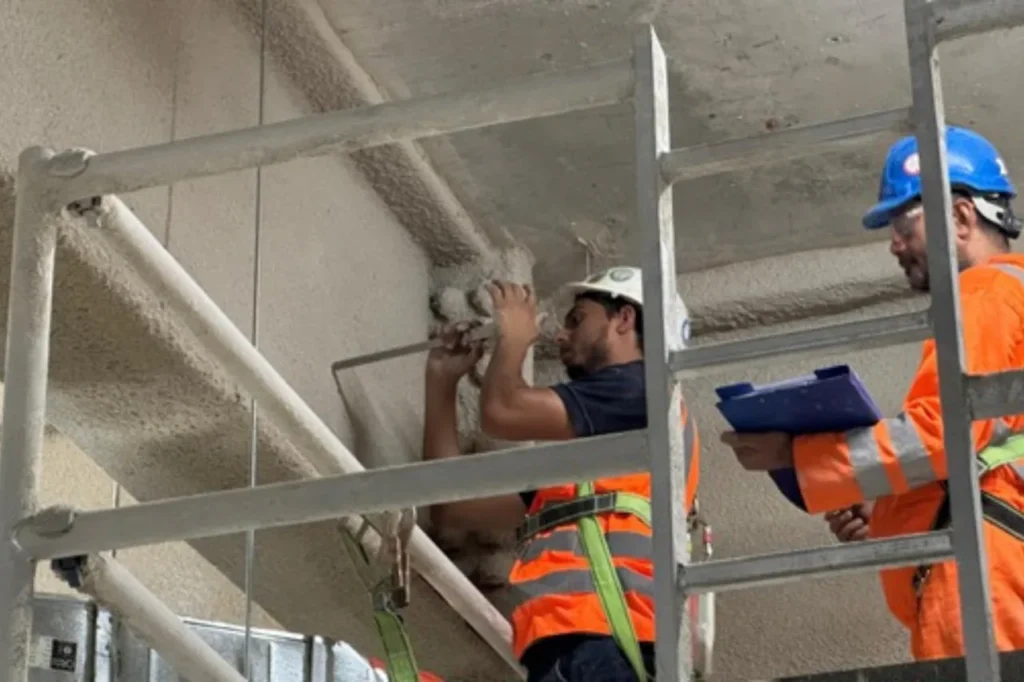
For sprayed cementitious fireproofing, samples are cut, dried and weighed to confirm the density on which the fire rating depends. Low density means the material was over-diluted or over-aerated and will not perform as tested.
Adhesion and cohesion
Bond strength tested to the specified method to confirm the material stays on the steel — a fireproofing layer that falls off in the first minutes of a fire protects nothing.
Coverage and damage
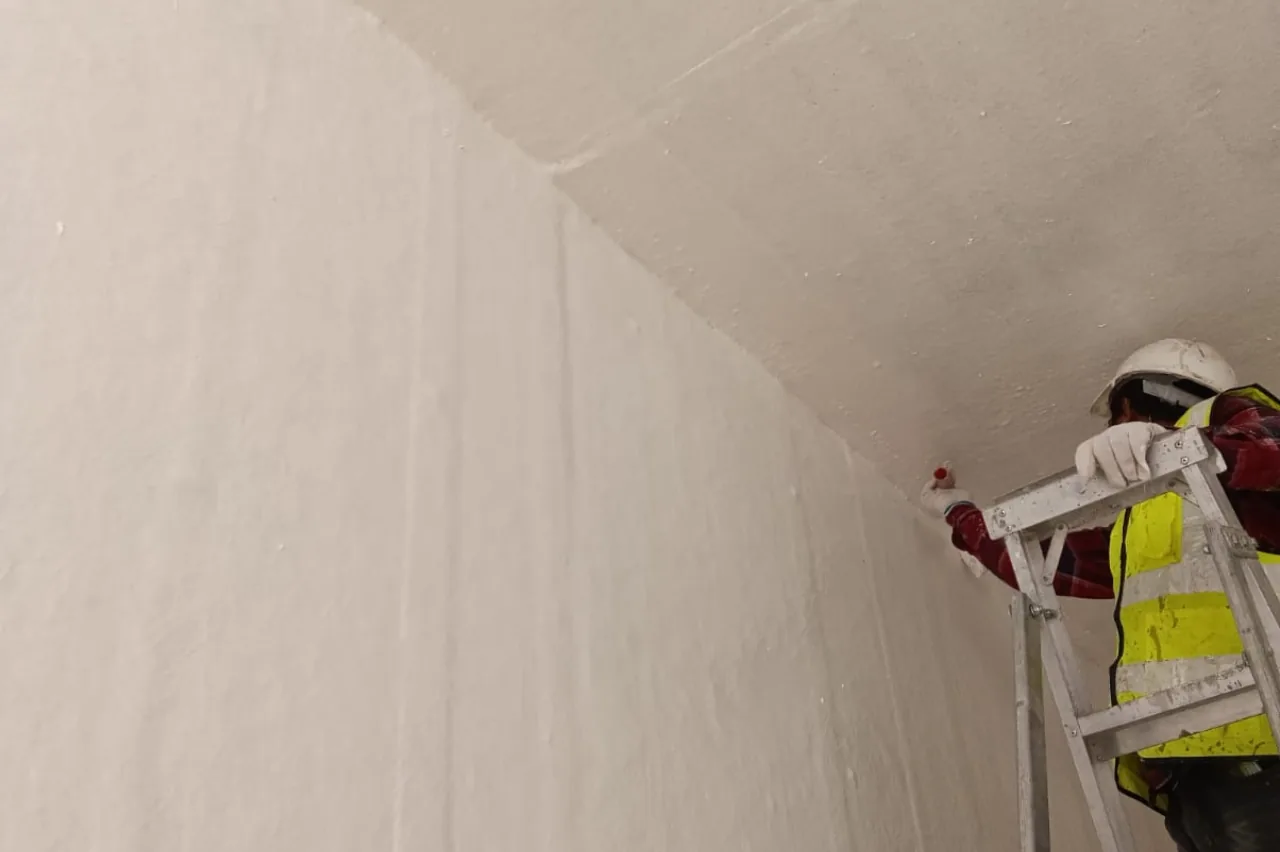
Visual inspection of every member for missed areas, damage from later trades (hangers, bolts, cable clamps driven through the coating) and areas re-sprayed after repairs.
Report
Measurements by location, photographs, non-conformances with the required corrective action, and a close-out record after repairs — issued for Civil Defence and consultant approval.
Intumescent coatings: a special case
Thin-film intumescent coatings are specified where the steel is seen — atriums, lobbies, exposed structures. Their required dry film thickness is set per section size and rating from the manufacturer’s assessment, and the tolerances are tight because the coating is only a few millimetres thick. Independent DFT measurement at the specified frequency, with the readings compared to the schedule for each member, is the only way to know the rating has been achieved. Topcoat compatibility and the coating’s environmental class matter as well.
What it costs the owner not to inspect
Thin fireproofing is not found until a Civil Defence inspector or an insurer’s surveyor asks for the measurements, or until a fire. Re-spraying after finishes are installed means stripping ceilings and services; discovering the problem at handover delays occupation. An independent inspection during application, with the findings closed as work proceeds, is a fraction of either. It also gives the main contractor a defensible record if the installer’s work is questioned later.
Sequencing
Inspect at first application on each floor so that thickness and density problems are corrected before the crew moves on; inspect again before ceilings and cladding close; carry out the final walk-through before handover. Fireproofing inspection pairs naturally with firestop inspection of the same compartments and with coating inspection where protective paint systems are specified on the same steel. To arrange an inspection, send the fireproofing schedule and the structural drawings through the inspection request form.
Specification wording for fireproofing inspection
A clause that produces a usable inspection states the fireproofing product and its listed thickness schedule by section factor and rating; the applicable test standard (ASTM E119 furnace ratings are the usual basis); the thickness measurement frequency per member type and floor; the density test frequency for sprayed products; the bond-strength test method and frequency; the acceptance tolerance for individual readings and averages; who carries out the independent inspection and who witnesses; and the hold points — first application, before enclosure, final. It should also say what happens on failure: re-application to the full thickness and re-inspection of the member, not an average that hides a thin flange.
A worked example
On a logistics warehouse with exposed steel portal frames, the applicator’s own records showed every member at or above the scheduled thickness. Independent measurement at the specified frequency found the top flanges and the undersides of rafters at or above schedule, and the webs of the columns — sprayed from one side at an awkward angle — consistently short. Density samples were within specification and adhesion passed. The webs were re-sprayed and re-measured within a week, before cladding, at a cost that was small next to the alternative of stripping cladding later. The final report recorded every reading by member, which is the document the owner now holds against the two-hour rating the building was sold with.
Frequently asked questions
What does a fireproofing inspection measure?
Thickness of the applied material against the schedule for each section factor and rating, density of sprayed cementitious products, adhesion or bond strength, substrate condition and coverage, with all readings recorded by location.
Is installer self-certification accepted?
On many projects it is the only record, but consultants, insurers and Civil Defence increasingly expect independent measurement. A third-party report removes the installer’s conflict of interest.
How is intumescent coating thickness checked?
With a calibrated dry film thickness gauge at the frequency in the specification, compared against the manufacturer’s thickness schedule for each member size and rating.
Which standards apply?
Fire-resistance ratings are based on furnace tests such as ASTM E119; thickness measurement of coatings follows SSPC-PA 2 methods; the project specification and Saudi Civil Defence requirements set the acceptance criteria.
When should fireproofing be inspected?
During application on each floor, before ceilings and cladding close, and at a final walk-through before handover — not after finishes are installed.

Independent passive fire protection inspection and testing consultancy based in Riyadh. We do not supply or install fire protection products — our role is to observe, measure and record.
Request an inspection
Send the scope, location and any drawings. We review the scope, inspect on site, record every finding with photographs and measurements, and issue a report for Civil Defence and consultant approval.